


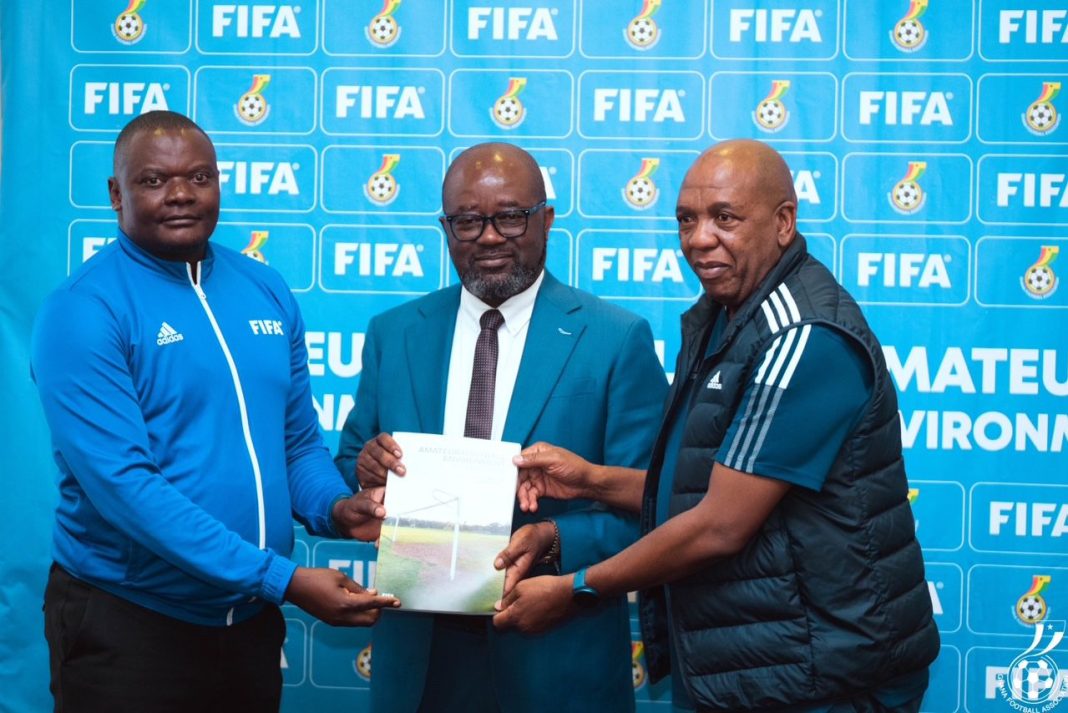

Ghana Football Association (GFA) and FIFA wrap up a two-day comprehensive Youth Football Development Assessment in Ghana’s capital, Greater Accra – key outcomes from the program.
The Ghana Football Association (GFA) and FIFA have successfully concluded a strategic two-day workshop in Accra centered on the assessment and future trajectory of youth football development in Ghana and across the globe.
Findings from the global Youth Football Development Survey, paired with a specialized country report on Ghana’s grassroots pipelines, were officially presented to key sports executives and national stakeholders.
Hosted at the Marriott Hotel in Accra on 27 and 28 August 2026, the sessions were spearheaded by FIFA Senior High-Performance Experts, alongside representatives from GFA Technical Directorate.
GFA Vice-President Mark Addo officially kicked off opening session, providing members of the Executive Council, regional football chairpersons, and technical directors an in-depth look at the analytical breakdown of Ghana’s talent identification structures.
The second day expanded the dialogue to broader institutional partners. Key attendees included delegates from the Ministry of Youth and Sports, the Ghana School Sports Federation, private academy proprietors, security service sports divisions, and youth scout networks.
Key Focus Areas Of The Workshop:
1. Talent Identification Protocols: In effect, the report suggested that, there should be a policy infrastructure frame work, which will streamline national pathways to spot and nurture young talents across all sixteen regions.
2. Academy Standardization: The findings established that, a well coordinated operational and educational guidelines should be implemented for both private and public football academies in the country.
3. Coaching and Infrastructure: Enhancing grass-roots coaching certifications and improving access to safe training facilities for under-13 to under-17 age brackets.
4. Inter-Agency Collaboration: Aligning school sports competitions with national sub-junior tournament calendars to avert or prevent player fatigue and maximize talent tracking.
Plus, the analytical report serves as both a benchmark of Ghana’s current youth system and a strategic roadmap for future talent retention. The GFA highlighted that the insights gained will directly shape the nation’s upcoming five-year technical development plan.
While adding that, the joint initiative was facilitated through the ongoing partnership between the GFA Technical Directorate and FIFA’s High Performance Department,