


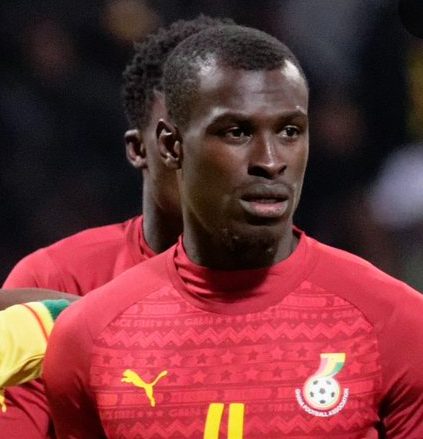

The story of Edwin Gyimah is more than just a legal dispute over a piece of property in Obuasi; it is a sobering look into the volatile intersection of fame, family expectations, and the invisible pressures that often haunt African athletes.
Gyimah, a versatile defender and midfielder who earned his stripes with the senior national team of Ghana and spent a decade as a household name in the South African Premier Soccer League (PSL), represented the pinnacle of success for many young Ghanaians.
However, the former Black Stars defender recent appearance on the popular courtroom-style radio show, Oyerepa Afutuo, has sent shockwaaves through the Ghanaian sports community. At age 35, a player who once donned the national colors and carved out a career in club football for himself is currently at the center of a bitter property dispute with his own flesh and blood.
Why Is Gyimah Fuming?
Edwin Gyimah’s account is a harrowing one: a return from South Africa following a string of unsuccessful contract trials, only to find himself allegedly locked in a battle for his own 8-bedroom house in Obuasi.
The veteran player claims his family-including his sister-attempted to leverage his financial vulnerability, demanding he sign over the property for a mere GHc50,000. Now reportedly homeless and suspecting spiritual interference from within his inner circle, Gyimah is seeking the immediate eviction of his relatives, including his mother, who is currently battling a stroke.
While the legal and moral complexities of this case are for the mediators and courts to decide, Gyimah’s predicament highlights a much broader, systematic issues facing young footballers in Ghana.
Barrier to progression: Why Ghanaian Stars Struggle to Stay Shining
The “rags-to-riches-to-rags” trajectory is an all-too-common narrative in Ghanaian football fraternity. Beyond the pitch, several factors frequently hinder the long-term success and stability of our athletes.
Now, the absence of a structured post-career transition framework in Ghana creates a “cliff-edge” effect for aging players. The transition from the high-stakes environment of international football to domestic life is often unsupported, leaving veterans without the vocational skills or safety nets needed to pivot into new industries.
This systemic gap, exacerbated by public fallouts slump into a permanent downfall. For many, the lack of a clear exit strategy means that once the boots are hang up, they are left to navigate complex legal and personal disputes with little more than the remnants of their former fame, often leading to the tragic homelessness and destitution currently facing veterans like Edwin Gyimah.
In conclusion, as Gyimah faces the agonizing choice of evicting his stroke-stricken mother and hostile siblings to reclaim his life, his story serves as a flashpoint for a national conversation. It forces us to ask: why do so many of our heroes return home to find their trophies gathering dust and their doors locked against them?